
Should we burn the monasteries, or: what actually is dharma?
institutions of enlightenment and their discontents

A friend of mine, Vals, is spending some time living in a Thai Forest Tradition monastery. He wrote:
Buddhist monk be like “nothing is permanent, everyone is trapped in a cycle” meanwhile their chore is sweeping leaves inside of a forest. Bro you could move out of the forest and contribute to more permanent things like stone work.
Funny and mostly in jest, but I’ve seen similar sentiments in dharma twitter that I think was based on a value judgement that’s roughly shaped like… this:
If the world is burning and you claim to understand why, why not do something about it? If you’ve seen through the illusions that bind ordinary people to suffering, why stop at leaf-sweeping instead of designing better institutions, better tools, better ways to live? If you’re enlightened, why seemingly ineffective or scale-blind?
Modernity built machines that cured diseases, fed billions, and extended sensory reaches like never before. Capitalism and fiat money, for all their brutality, force-fed growth to the world using the biggest stick throughout the known history—compound interest. Or inflation. Against that backdrop, the image of men in ochre robes sweeping a courtyard feels atavistic. They consume what others produce, They accept alms, and build nothing that scales.
This makes it almost too easy to push further and say what’s the point? These people left society, but the roads leading to their abodes were paved by others; luxury of withdrawal is always subsidized by those who never stepped out. SpaceX’s satellites spread across the skies and they can’t do a thing about it even if those satellites end up doing real harm. What’s the use, then, of their beautiful silence, their zazens, their esoteric instantiations, their lineages?
Which reminded me of:
Should monks join frontier AI labs?
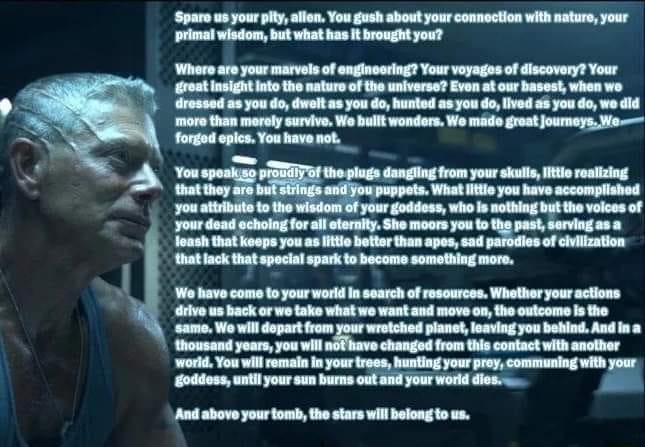
But that line of questioning obviously hides a bunch of hidden assumptions. Followed to its end: if monks understand reality, why don’t they build things? why not join AI labs or start companies, the modern equivalents of cathedrals?
I think the unease comes from a hidden hope that monks, by virtue of their insight, might stand in for something like pure mind made manifest. If the dharma really means seeing clearly, shouldn’t that clarity extend to gradient descent and orbital mechanics? Shan’t wisdom, once detached from illusion, translate into competence across every domain?
Or maybe there’s a weaker form of the hope, in which those who spend much of their time looking inward might emerge with something transferable. That those who’ve spent decades watching the mind should, by now, know how to fix the world. I personally would call it a false hope that seeing clearly should do something.
Yet monks are people produced by causes, through conditions. They come from particular families in particular villages, they were born into Thai or Burmese or Sinhalese conditions, they speak the languages of their regions, eat the food of those ecosystems, and inherit the educational and economic patterns of their societies. They shave their heads because the vinaya prescribes it, they sweep leaves because that is how the practice environment is designed. They meditate because they were taught to, they teach because their sanghas need them to, and some become ascetics because they follow the precepts.
For some of them, monastic life is also a kind of profession. That fact, too, says something about the kinds of work that remain available, and about the worlds from which they supposedly withdraw. Which produces different kinds of experience and insight—but maybe not in an obvious way—when compared to someone from the western world. Thus their strengths and limitations arise from the same causal mesh as everyone else’s.
And also in which seeing clearly—which becomes a proxy for knowledge in certain circles, which is a proxy for IQ, which is a proxy for wanting the world to make sense in neater sort of lines—should not be seen as a cure-all, nor the traditions that engender the conditions and skills related to it. It’s the same kind of want that underlies the meme if you’re so smart, why aren’t you rich?
What use is tradition?
What the traditions actually engender, though, are people skilled at seeing conditions and dependencies of reality, which is not the same as direct manipulation. They operate within history, and their monasteries are parts of the same historical process that builds railroads and data centers and ideologies. All expressions of the same dependent arising, differing only in which parts of the field we pay attention to.
Monks are already doing what their circumstances and conditions permit, which is to continue an ancient form of investigation or research into how causal mesh and interdependence appears when you look closely enough. It’s just that unlike most research programs, theirs doesn’t necessarily aim to produce anything, mostly because their tradition started long before anyone thought seeing clearly should come with citations :)
Then at a certain point, this type of investigation eventually produces a distinctive effect, which is allowing practicioners to go beyond the observer-observed duality and with it, extinguishing the conditions that give rise to dukkha.
So if we actually wanted monks who can work on AI, then the conditions for that outcome would have to exist. Billions of dollars would need to be invested into the plain infrastructure that makes technical work possible. Universities with hardware labs, fiber networks, steady subsidized electricity, compute clusters, venture funding, immigration policy, a monk quota system, etc. Temples and monasteries would have to stand near those ecosystems and monks would need time, access, and most importantly curiosity (which might come from conditions even further back in their primary and middle school education); the vinaya might need reinterpretation to permit coding camps.
And even then the result would not be some miraculous fusion of insight and capitalism but maybe a few monks who write papers on mech interp, engineers who take the Boddhisatva vows, and some other stuff that might be QRI-flavored. The causal and kammic mesh would adjust accordingly, as it always does.
500 lifetimes of foxing around
There’s a koan named as Hyakujō’s Fox. In it, an old monk told his student that the enlightened person “is not subject to the law of causation”, which is an insane thing to say.
The kammic maturation of that statement? He is said to have been reborn as a fox for five hundred lifetimes.

When Hyakujō (Baizhang) meets this monk-turned-fox, the former’s comment turned the latter into a human again by saying that the enlightened person does not ignore cause and effect much less escape it; instead, it was simply seen.
The old monk-fox imagined that awakening meant standing outside the causal and kammic mesh, when in fact the experience of awakening is the collapse of the illusion that there was ever an outside.
If in the previous section we talked about how modernist cultures sometimes treat contemplative traditions through a noble savage lens (false hope), this koan showed that contemplatives also have this recurring temptation that Direct Seeing somehow grants immunity from the causal processes in play. It’s really, really not. Monks, monasteries, and lineages are not exempt from causative and kammic chains as anyone else’s.
Nowhere it is more exemplary than the Vajradhatu case of 1988-89, when the board finally admitted that Osel Tendzin had been HIV-positive for three years, had continued to sleep with male and female students without protection or disclosure, and that two senior board members had known the whole time and stayed silent, which infection chain reached a young man whose girlfriend then died of AIDS, while Tendzin told the stunned sangha that he “thought something would take care of it for me.”
Or Rigpa’s 40-year arc with Sogyal Rinpoche who kept an inner circle of quote-unquote dakinis flown to his hotel suites, publicly slapped and punched students at retreats, financed a million-euro French temple with charity status, and was only forced out in 2017 after an open letter from eight long-time students catalogued beatings, coerced sex, and hush-money stuff. Or maybe in Shambhala 2.0 when Sakyong Mipham—Trungpa’s own son—was accused by multiple women of drunken assaults, paid confidential settlements, and then simply relocated to Nepal where he still teaches donors who sign NDAs while he kept the $2.4 million country home. Or is it the Karmapa succession conflict that has lasted three decades with Indian courts still undecided onto who controls the gold, relics, and multimillion dollar land trust?
It even repeats in smaller scales. For example, Lama Norlha’s Kagyu center in upstate New York where a 30-year pattern of sleeping with teenage nuns ended in a 2018 lawsuit or Dagri Rinpoche who assaulted a woman in India’s Gaggal Airport which was not his first case. Each time, the general pattern is made clearer: absolute guru authority with no external audit or control mechanism, metaphysical sort of threats, and financial bribes to keep victims quiet.
To be clear, every religion has its scandals and cover-ups; I single out western Vajra lineages mostly because it strengthens the point of this section, which is that no degree of crazy wisdom nor enlightenment let anyone skip the plain law of cause and effect.
That is: logistics matter a lot, which means institutional design. Compare the old Theravada rules (the collective vinaya, which could semantically mean “driving out” or “removal of”) which work like a procedural neighborhood watch. When a monk breaks the big stuff like sex, killing, theft, or lying about siddhis, then the others might meet, vote, and kick him out (saṅghakamma) and that’s it. Not to mention the individual precepts, Sīla, which are adhered pretty strictly in most SEA temples. In contrast, Samaya in the Tantric or Vajra world isn’t a rule system at all. It is meant to be and designed as a private devotional bond between disciple and guru, and its points can be interpreted solely by the guru which makes it spiritually intense but logistically fragile. Chögyam Trungpa, which books I really like, even have special chapters on his books on how these relationships can ideally work. The way he wrote about it is profound, but profoundness is no replacement for due process.
Should we burn the monasteries?
So if monasteries, lineages, monks, and all such elements are subject to cause and effect like everything and everyone else, then the initial question of this piece becomes almost moot. When their specialness disappear, we can put them into a rough category that houses other eccentric reclusive weirdos like the Mormons, the esoteric christians, the flat-earthers, or the exotic communes. In the liberal imagination, all these can coexist under the tyranny of choice. The monks aren’t parasites, just participants in the great pluralistic carnival of lifestyles. Free market, baby!
But if we keep digging deeper into the affective charge of that question—the thing that makes it sting rather than just amuse—we begin to sense that what’s being doubted isn’t the efficiency of any particular institution, but the value of what it teaches, which comes back to the “false hope” remark in the previous section.
It’s not merely should they exist? But does the kind of practice they embody still matter to us? When we ask whether we should burn the monasteries, what we’re really asking is whether the dharma itself—the insight into impermanence, non-self, dependent origination—still carries weight in a world supposedly moving toward post-scarcity and automation through AI godsummoning.
I do think that humans have an enduring urge to gather around and talk endlessly about the questions relating how to live, how to see clearly, and how to suffer less, and monastic institutions are only one of many historical articulation of that urge. The urge itself—the drive to understand the structure of our own becoming—keeps resurfacing in a very diverse way. Sometimes as continental philosophy, sometimes as the blossoming of many ontologies and communities.
But is dharma still a good frame, or even a living one, for responding to that human impulse?
What good is the dharma?
We need to notice that the question itself is based out of two different ground. One is economic; what does it produce, and for whom? The other is existential; can it still speak to the fundamental questioning of being human? When people today ask what good the dharma is, they often mean the first, which is what visible outputs or social functions justify its continued existence.
To answer this, we must understand that the dharma as per Gotama was never a technology of external production. It was a technology of attention, of seeing through rather than building up. It operates in the phenomenological fields where the goods are hidden and the fruits subtler still: insight, disillusionment, sometimes liberation, or sometimes just the capacity to not flinch while things fall apart.
This means dharmic benefits are generally emergent and second-order—its effects are upstream of many downstream behaviors and as such, there’s little to no immediately attributable outputs that economists or sociologists can gawk about. And even if we borrow, say, an EA-ish frame, we might say the dharma’s metric of success is its reliability as a method for extinguishing dukkha and revealing the causal architecture of mind. Not its capacity to generate tradeable goods or to fix people in the therapeutic sense, but its capacity to illuminate the process of fixing itself, and the compulsion behind it.
But what about the second question? Is at least a good psychotech to help human flourishing?
Let’s do definitions.
The simplest and least romantic definition is that it’s a set of practices, concepts, and participatory descriptions whose aim is to reveal how the machinery of becoming (or bhava) operates so that one’s practical relation to that machinery can be altered; in other words, dharma names both a pedagogical tradition (teachings, rules, methods, lineages) and a descriptive hypothesis about how phenomena arise together, and those two are not tidy categories but overlapping instruments: language, ritual, meditation techniques, precepts, by which a living system learns to notice its own causal mesh and perceptual trappings and, when it notices them, alters the way those patterns feed back into experience.
A classical answer would take longer, and would probably begin with the ordinary meaning of dhamma which is what holds or keeps (invariance), or what makes a thing behave as it does (dependent origination). I’m not exactly the right person to talk about this, but dharma (Pāli: dhamma, which we will use henceforth) has never had a single meaning. It was the teaching of the Buddha Gotama but also the structure of reality itself, which the Sammaditthi Sutta (MN 9) made clear:
“When a noble disciple has thus understood [x], the origin of [x], the cessation of [x], and the way leading to the cessation of [x]… he here and now makes an end of suffering. In that way too a noble disciple is one of right view… and has arrived at this true Dhamma.”
Where [x] is, well, among other things: suffering, ageing and death, birth, being, clinging, craving, contact, etc.
So we can see from here that the dhamma is giving people the analytical and phenomenological tools to explore and dissect their experiential processes, which helps to map processes so we can say something like when such and such conditions arise, such and such conditions follow, which then allows the arising of such and such conditions, which…
What this means, inconveniently, is that the dhamma is not inherently beneficial. Sure, it’s oriented towards exhausting the conditions that give rise to dukkha, but the exhaustion emerges as an effect of understanding. The point of Right View, for example, is not that one necessarily adopts fixed a doctrine but that one learns to see the causal and kammic chains in one’s own perception and affective reactions. To see craving as craving, becoming as becoming, certain processes as themselves and so forth, is the same as loosening their grip. The dhamma gives us a seeing-through ability to the mechanisms, processes, and strangeness by which “I/you” is generated in the first place.
And then Nāgārjuna and certain Chan or Dzogchen interpretations take the middle path and see it as self-consuming set of instructions that eventually undermines its own authority, a raft to be thrown away once enlightenment is (the) seen, or a house that should not be built again.
What good is the unverifiable?
What good is something that has a complicated relation to external ways of checking whether it’s worth it—the general unverifiability of the dhamma?
The only way to check, then, if checking even makes sense, is to turn into its own shape, inward, its texture, towards what’s citationless, “orthogonal” to production.
When I try to be honest about this, I’d say that the dhamma, when pursued sincerely, doesn’t add meaning. It drains the solidity of all meaning and of all phenomena, it teaches Emptiness, it allows the appearances of conditions to be seen as themselves, arising and passing away ad nauseam. In the modern conception of human utility, this is of course not life-affirming. Its deeper implication is that solidity is precisely what binds one to the samsaric wheel. Yet its even deeper implication (or inevitable consequence) is that of freedom from compulsions, including the compulsion of spiritual seeking. The cooling of the fires of craving, aversion, and delusion. To understand where the heat comes from and how to let things cool down, maybe not forever, but in which the choice to do either/or can appear in a healthier way.
So what is it good for? Well, good for whom? Useful to what end? The more one looks, the less stable those references become. The end result is not not-caring, but a deep experiential understanding of things as themselves, and perhaps a non-clinging intimacy with the fact that anything at all is happening.
It most definitely doesn’t cancel all pain or make people immune to loss, it doesn’t turn bastards into saints, it doesn’t guarantee that life will suddenly make sense in a Disney kind of way.
What it does is to quiet the self’s endless war against what is.
Chop wood, carry water
Coming back to the initial trigger—forest monks sweep the leaves because the ground collects them, because the vinaya prescribes tidiness, because sweeping fits the rhythm of daylight in a forest compound, because the body requires repetition to stay embodied, because tradition, because there’s nothing much to do, because the leaves need sweeping, because.
We think of this and at the same time see ourselves thinking it; our expectations and frustrations appearing, dissolving. We can see that the monks are not symbols. We see where their rules come from, e.g. stories of the early sangha, practicalities of shared living, the attempt to prevent certain harms and standardize certain virtues. We see that those rules constrain and protect at once, because the same precept that prevents greed may also prevent changes. We see that there are trade-offs. This is what ehi passiko is: come and see, look closely, not only at the monks but at the entire network and mesh of causes and interdependencies that make this scene possible. From the donors who built the beautiful statues to the insects moving through the walls. Seeing this directly is the dharma itself.
You shall no longer take things at second or third hand, not look through the eyes of the dead, nor feed on the spectres in books. You shall not look through my eyes either, nor take things from me, you shall listen to all sides and filter them from yourself.
(Song of Myself, Walt Whitman)
So when Vivid Void wrote a viral post that meditation weakened his shape rotation ability and Andrés Gómez Emilsson of QRI fame replied that it deepened theirs, both are simply describing the specificity of their conditions, neural gift, their practice methods, the bodies, the food, the air, their proclivities and kammic momentum, their flaws and their greatness, and of course their education and jobs. Thus the dharma is never a guarantee of sameness but a framework for understanding difference without anxiety, without the second arrow.
When we are tempted to project onto the monastery to demand it be more useful, more modern, more productive, or conversely, to defend it as sacred and unchanging, we can pause and watch those impulses arise too, as effects among effects.
I want to be the very best

What if I want to change the world? What if I have, then want to do it even more?
Then I can see where that heat comes from, what conditions birth it, and what it costs. I spent slightly less than a decade reading Rationalist Thought. I never really change, if judged in terms of still loving its tools. But I now see that the urge to know, optimize, legibilize, save, do, be saved, understand, see, make sense, remember, and archive are not free-floating neutrals inside the mind, but also felt-senses that are incestuous with everything else.
(Apologies to Gendlin for abusing the term, but I feel like it encompasses much more than its initial definition)
Me wanting improvement is also control, is also drive, is also the result of my parents’ cognitive proclivities, is also a trap, is also a gift, in different degrees, through different context, so it’s not really about the doing, the doing of changing the world or finding love, or having friends, rather, it is in seeing which parts mostly come from care and which from fear which from habit and which are textural joy with an explicit experiential understanding that none of them will end the cycle, will end the urge, will end the seeking, will end the craving, will end the meaning chain—
The world can be changed as far as it wants to be changed, seen as far as it wants to be seen, and both are a form of practice.
Right Action as bidirectional
At this point I think it’s pretty clear that the dhamma doesn’t necessarily turn someone away from the world, and that in which its institutional production (through monasteries and such) is not necessarily related to whatever the dhamma is. But comes the question: in practicality, what kind of action does it cultivates? Sure, realization might or might not reshape conduct, ceteris paribus, but surely there is a measure of effect? To deny this is to veer into extremes.
I think Right Action answers this in a rather elegant way. A kind of action that arises cleanly out of the causes that make it possible, that preferably does not add another layer of distortion, otherwise known as wu wei or effortless alignment. To act rightly is to respond proportionally, and by proportional it means one is able to see the limits of their influence (or lack thereof) and integrate that to their actions.
But this definition is mostly a modern reinterpretation. When the Theravadins speak of Right Action, we have to realize that Buddha Gotama didn’t really take it from the top (symbolism) down to the bottom (operationalization). Rather, Right Action or sammā-kammanta came from logistics and practicality, or at least what is now deemed as such, and because of that, its classical definition is narrow in a different way—abstention from killing and intoxicants, taking what isn’t given, refraining from sexual misconduct, etc. As the bodily-conduct limb of the Eightfold Path, it supports every other aspects of practice, because in carving a floor of non-harm, a person could stabilize their samādhi, which leads to insight. When attention stops being so pulled in many directions by fight-or-flight, by guilt, by ruminations, and by the urge to control, then attention becomes a fertile ground in seeing causes and conditions. It’s as simple as that.
There’s more subtlety in this, in particular, there’s a misconception that the Eightfold Path in general is a prerequisite of the practice and not its results, while in reality the duality is false. Of course it’s both. What is speech, action, livelihood, effort, mindfulness, concentration, intention, and view if not living? We do not infer a linear causative model where the dhamma explicitly and implicitly doesn’t do linearity.
Right does not mean (the classical conception of “right” which is) correct according to a rule (and if not right, then punishment comes). Right here means aligned with conditions and non-warped by unwholesome roots. In this sense, early in the practice, Right Action is the learning that kamma will maturate; volition and actions matter in a way that we’ve never really examined before; there’s an exist path, but your attention will flourish if you restrain the obviously harmful actions. But later in the practice, once insight actually breaks ownership or identification with phenomena, Right changes to also become the sense of non-compulsivity and non-ownership in real time. This, interestingly, also results in actions no longer needing to argue for themselves by way of conventional discourse. And if you’re a traditional Buddhist, it also means that you can be free from guilt.
So if we want to know “what kind of action does [the dhamma] engenders?”, it’s actually rather simple. It is it is the kind of doing whose conditions and intention is clean enough that the act does not have to be rationalized or anesthetized afterward (or worse—be hid). Actions that leave the littlest of residue in the bodymind and much less collateral harm in the people and ecologies they touche; the kind of doing that, if reproduced by past and future selves and by others, would decrease the average (what I call as) compulsion-load in our shared world rather than increase it.
Right Action, then, is the shapes of behaviour whose upstream mental roots are unwarped and whose downstream effects make further non-warped action easier.
There’s a stubborn point to make in which sammā-kammanta was classically narrowly defined, again, because it was practical—Siddhattha Gotama, after all, was immensely practical. The classical path differentiates body, speech, and economic role with more granularity than modern ethics talk usually does, and keeping those differences clear prevents self-deception and abuse.
Words are cheap
In the previous section, I mentioned the proportionality of actions. I’ve given some thoughts about this, in particular because I did read Cate Hall’s agency post quite a bit and had Thoughts.
I don’t think proportionality in Right Action is merely about “fitting the context” or “measured response to a situation”. I think it is about attending through the act, such as I am deeply experientially of the causal leverage I actually have rather than to my self-image. I over-intervene because I want to feel like I am fixing it, or because I want to compensate on me feeling guilt or somesuch emotions. I under-intervene because I got trapped in specific forms of helplessness or outsource my agency to abstractions.
Both pattern are compulsive. In contrast, Right Action, in my practice, often looks like locally unglamorous things that are done exactly at the place where my commitments produce actions that solve whatever it is that needs to be solved, such as paying debts on time even when cash is tight rather than laundering the guilt through silence or long messages; or doing a deadline throughout sleepless days but without being delusional about the nature of that work or how it sits in the scheme of things, etc. Or it could be as big as patiently setting up the pieces so a negotiation could be done before it’s done. The scale might be small or very large (the scale should not matter), but the taste is specific. It’s simple attending without flinching away. It also could be the textural joy of specific domain masteries.
Mostly it is a refusal to deceive myself now and a refusal to take actions that will make self-deception easier later. Imagine an action that we would narrate, unedited, in a room with the people affected, maybe even with friends present) and then notice whatever is arising—does it feel right?
Right Action, then, is the shapes of behaviour whose upstream mental roots are unwarped and whose downstream effects make further non-warped action easier.
It’s not that sexy, but we might need to do unsexy things sometimes.
*
*
*
If you’ve reached the end, please leave a comment :)
Or subscribe—this blog is permanently free.